Ryan Medlin
Technical Director
Code That Sets Us Free: How Accessibility Tech Changes Lives — And Why shaft.finance Is Building What Comes Next
Technology and software have quietly become some of the most powerful tools for human dignity in the accessibility community, turning “impossible” moments into everyday reality. Yet most of the tools that exist today were built by a tiny number of teams, while millions of people still wait for technology that actually sees them, hears them, and speaks with them.
How technology changes a life
Across disabilities and conditions, a few patterns show up again and again:
Software can turn barriers into workflows: what used to require a caregiver, a translator, or a specialist becomes a button, a voice command, or an automation.
Tools built “by and for” the community land differently: founders who live with disability themselves tend to design with nuance, empathy, and edge-case awareness that outsiders routinely miss.
Independence compounds: once someone can control their home, join meetings, or get a job through accessible tech, their confidence, income, and relationships all shift together.
The impact is clearest in real people’s stories.
Story 1: From “unemployable” to engineer
For years, Michael was told—quietly and sometimes very directly—that being blind and partially deaf meant he would always be “a special case” in the workplace. Recruiters doubted he could keep up, hiring managers worried about “team fit,” and most interviews ended with polite rejections.
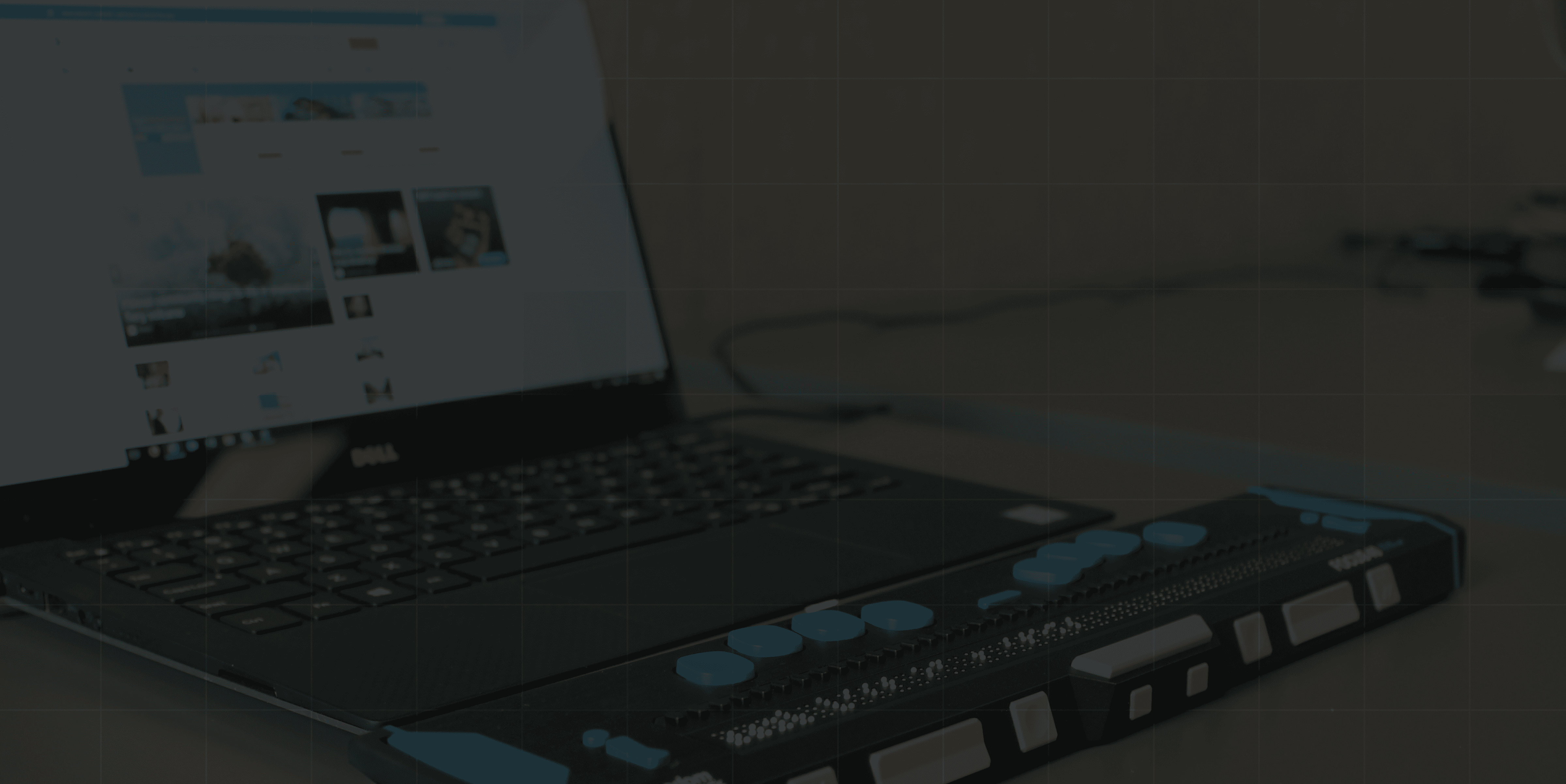
Then he sat down in front of a laptop running a screen reader and simply started coding, live, for an engineering interview panel. Line by line, with synthetic speech reading every character on the screen, he built and debugged the exercise faster than many sighted candidates, proving that the limitation was never his ability—it was the world’s willingness to provide accessible tools. Today he works as a software engineer, shipping production systems every day, his screen reader and accessibility stack turning a role that once seemed impossible into his normal.
If you want a deeper look at how developers with disabilities are breaking into tech, “Coding Beyond Limits: Inspiring Stories of Developers with Disabilities” captures several of these journeys:
https://intellectualpoint.com/coding-beyond-limits-inspiring-stories-of-developers-with-disabilities/intellectualpoint
Research on programmers with visual impairments and collaboration challenges is also available here:
https://from.so/static/714e2aad24570d01fc90cd382c8319c6/understanding_accessibility_and_collaboration_in_programming_for_people_from
For the next Michael, though, that outcome should not depend on being “exceptional.” It should be the default: accessible developer tools, accessible interview platforms, and companies whose internal software respects screen readers, high-contrast modes, and keyboard-only workflows from day one.
Story 2: Finding a voice that others can finally hear
Skinner grew up deaf, navigating a world where his words often arrived late, distorted, or not at all. Even when he did everything “right”—speaking, typing on his phone, trying to follow conversations—long, nuanced discussions at work or in class would break down into fragments and misunderstandings. Over time, the cost wasn’t just missed information; it was isolation.
Together with a small team, he helped build Ava Voice, a real-time captioning and text-to-speech system that gives non-voicing Deaf people a natural, expressive voice in any video meeting. Now, instead of sitting on the sidelines of a Zoom call, he can join, watch live captions, and have his typed responses spoken out loud with a lifelike, even gender-neutral voice that actually feels like him. Coworkers hear a confident colleague rather than a “communication problem,” and friends experience him as fully present—not as the person everyone has to “accommodate.”
You can read the full story of Ava Voice and Skinner Cheng here:
https://www.ava.me/blog/ava-voice-lifelike-text-to-speech-innovation-for-deaf-peopleava
Ava’s broader live-captioning platform for Deaf and hard-of-hearing users is here:
https://www.ava.me
Details on Ava Voice as a product are here:
https://www.ava.me/voiceava
And for those who want to see how the app works in practice, there is a product walkthrough on YouTube:
https://www.youtube.com/watch?v=PNoSWNUz1Z0
Moments that used to be exhausting—job interviews, performance reviews, deep 1:1 conversations—are now possible without a knot in the stomach. That is what accessible communication software does: it takes the weight of constant explanation off the disabled person and puts it onto the technology, where it belonged all along.founderspledge.
Story 3: A front door, a light switch, and real independence
On a quiet street in Pennsylvania, a woman with an intellectual disability and mobility challenges wanted something radically simple: to live in her own home and still be safe. For years, flipping a light switch or unlocking the door meant calling for help, waiting for staff, or giving up privacy. The message was subtle but relentless: “You can’t do this on your own.”
In KenCrest’s Smarter Living Home, that changed. Voice assistants now turn lights on and off, smart locks secure the door, and sensors plus automation handle things that once required another human in the room. Care teams still exist, but the power dynamic has shifted: she calls for help when she chooses, instead of having every small task mediated by someone else.
You can explore the Smarter Living Home story here:
https://www.kencrest.org/connect-with-us/blog/smarter-living-home/kencrest
More on KenCrest’s broader enabling-technology work and supported independent living is here:
https://www.kencrest.org/connect-with-us/blog/sil-transitional-home/kencrest
https://www.kencrest.orgkencrest
Study after study shows that smart home and assistive technologies are rated more favorably than traditional mobility aids because they don’t just solve a task—they restore a sense of control, safety, and identity. For wheelchair users and people with intellectual disabilities, software wrapped around hardware has become the difference between “placed” housing and a true home.
Why this kind of technology is still rare
These stories are uplifting, but they are also the exception. For every Skinner, Michael, or resident in a smarter living home, there are millions of people still:
Locked out of jobs because internal tools ignore screen readers or cognitive load.
Excluded from conversations because real-time translation, captioning, or voice agents are “out of scope” in someone’s product roadmap.founderspledge.Dependent on caregivers for tasks that smart, well-designed software could safely automate.One core problem: accessibility startups and open-source builders rarely have the same access to capital, marketing, or distribution that general-purpose consumer apps enjoy. Funding cycles prioritize quick revenue and broad markets over “niche” tools that, in reality, transform the lives of millions of people with disabilities.
This is exactly the gap shaft.finance is designed to close.
Why shaft.finance matters now
shaft.finance exists to unite builders, product creators, and advocates who are obsessed with accessibility—not as a compliance checkbox, but as the foundation of how AI, crypto, and general software should work. Instead of treating accessibility as an afterthought, the shaft.finance community directs funding, talent, and attention specifically into projects that improve life for people with vision, hearing, mental health, neurodiverse, mobility, and language-related barriers, both on-chain and off.
By connecting student developers, open-source contributors, and mission-driven founders with real capital and real users, shaft.finance turns “someday we should build this” ideas into shipped tools: screen-reader-friendly crypto agents, AI-driven captioning and dubbing pipelines, smart home integrations, and more. It is a community and funding engine built around a simple belief: accessibility tech is not charity—it is infrastructure for a world where everyone can participate fully and independently.
If the stories above moved you, the next chapter does not belong to another abstract “they.” It belongs to the people and teams who choose to fund, design, and build what comes next. shaft.finance is where those people are gathering—and where your support can directly help launch the next wave of life-changing accessibility technology.
https://www.ava.me/blog/ava-voice-lifelike-text-to-speech-innovation-for-deaf-people
https://www.kencrest.org/connect-with-us/blog/smarter-living-home/
https://www.salesforce.com/news/stories/blind-institute-technology-trailblazer/
https://accessabilityofficer.com/blog/become-a-software-engineer-even-if-you-are-blind